

A remote call centre job, or selling for yourself?
Both put you on the phone from home. One pays for your hours inside a rota. The other pays for what you close, on campaigns you chose. Which is right depends on facts about your situation.
 Aaron Vihersola · Co-founder · Growth & marketingRan a legacy telesales floor before building the alternative · Updated 3 Sep 2026
Take the call centre job if you need a contract, holiday pay and a wage that arrives whether or not anyone bought. Sell on the marketplace if you already know you can close, want to pick your campaigns and hours, and would rather be paid on outcomes than on time. If you are new to selling but want to get here, the salaried track is the bridge.
Eight rows, honestly
| Employed call centre | RingoMarket | |
|---|---|---|
| Who sets your hours | A rota, set by the employer | You, campaign by campaign |
| What you are paid for | Time on shift | Verified outcomes, or a salaried track while you ramp |
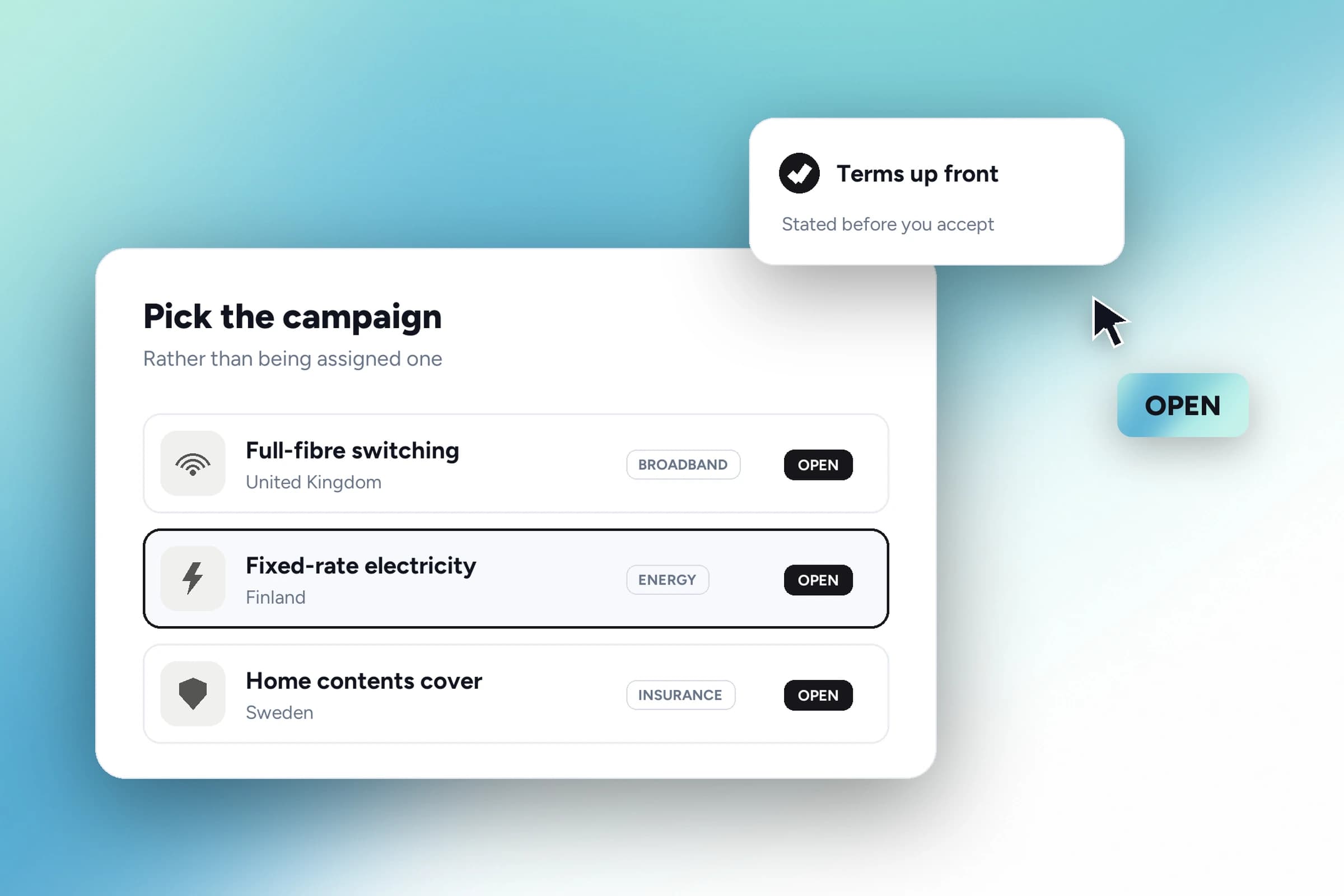
| Choosing what you sell | Assigned to a campaign | You pick it, terms stated before you accept |
| Where the margin goes | Funds seats, supervisors and floor space | No agency layer between the brand’s commission and yours |
| If you are new | Training, supervision and a wage | The salaried track exists for exactly this |
| Security | A contract, holiday pay, sick pay | None of that. You are self-employed |
| Where you work | Their floor, or their remote setup | Anywhere with a browser and a headset |
| Progression | Team leader, then operations | Better campaigns, and a record brands can see |
The two rows the marketplace loses, security and support while new, are the two that matter most to some people. The page is not trying to talk you out of them.
From your side of the phone
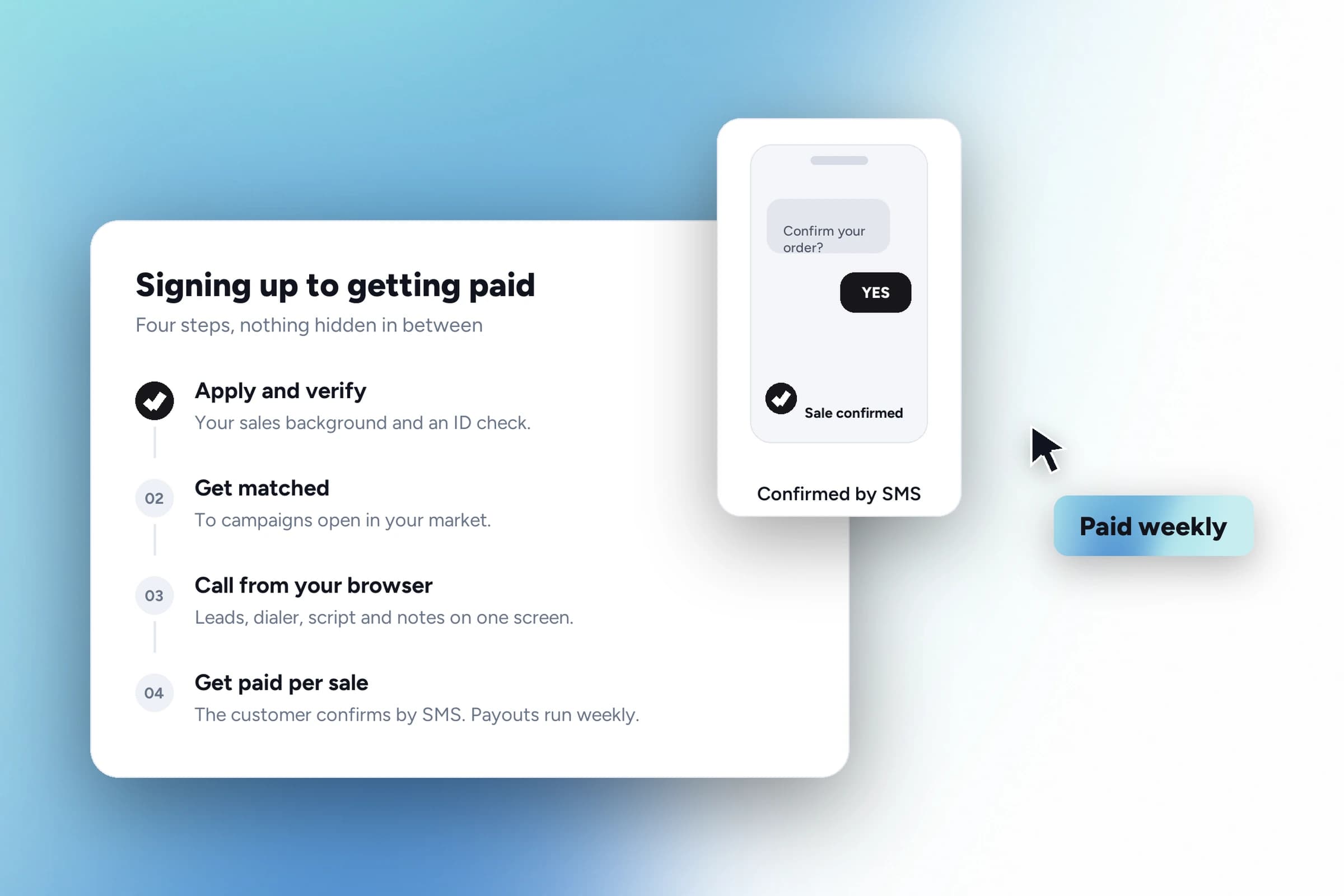
Take another campaign. Nobody to ask for extra shifts. The open list is the rota, and you write it.
Take fewer. Drop to one campaign, or none for a fortnight, without resigning from anything.
Matched in days. A new campaign starts when you are matched, not after a notice period on the last job.
A campaign can dry up. A floor never runs out of shifts, and a campaign can close. Choosing your work carries that risk.
Three things, honestly, and the page is not going to argue with them.
Deciding honestly
Asked by people weighing the two
Is a remote call centre job the same as remote telesales?
No. A remote call centre job is employment: an employer sets your rota, pays you for the hours and usually mixes inbound service with outbound sales. Selling on a marketplace is self-employment: you choose the campaigns, set your own hours and are paid on the outcomes the campaign verifies, with no employer and no rota.
Do I need call centre experience to sell on RingoMarket?
No, but you need phone sales experience: brands match sellers on what they have already closed by phone, and an application describing customer-service work as sales is the most common reason one is declined. Inbound service experience teaches the phone, not the ask.
Can I keep a call centre job and sell on the side?
Usually, subject to your employment contract. Campaigns run in evenings and at weekends as well as office hours, and nothing on the marketplace requires minimum hours, so many sellers start as second income and decide from there.
Which is right if I need a guaranteed income?
The employed job, or the marketplace’s salaried track. If a missed month breaks your rent and you cannot absorb a bad week, take the contract with holiday and sick pay. If you want to learn the work with a floor under you, the salaried track pays a monthly amount agreed up front with commission on top.