The dialer, the follow-up and your CRM, on one thread
Calls, confirmation SMS, follow-up email, callbacks and the handover into your own systems, all hanging off the same call record rather than four tools that each know a different part of the story.
Most telemarketing goes wrong in the gaps. The call happens in one system, the follow-up in another, the callback lives in someone’s notebook, and the CRM finds out days later from a spreadsheet. By the time your team sees the record, the context that made the sale is gone.
One record, from dial to CRM
Everything here attaches to the call it came from. The confirmation SMS, the follow-up email, the callback, the recording and the transcript are all part of one object, and that object is what lands in your CRM. Your team reads what the seller actually did, not a summary of it.
What the seller works from
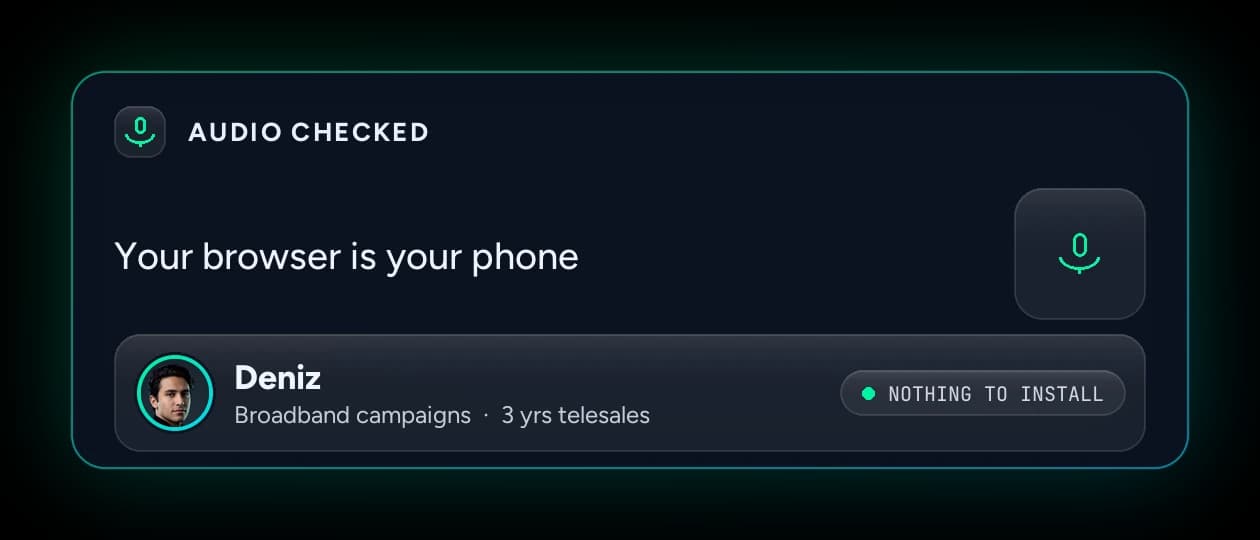
Browser dialer. Leads, script, notes and dialer on one screen, with no phone bill of the seller’s own.
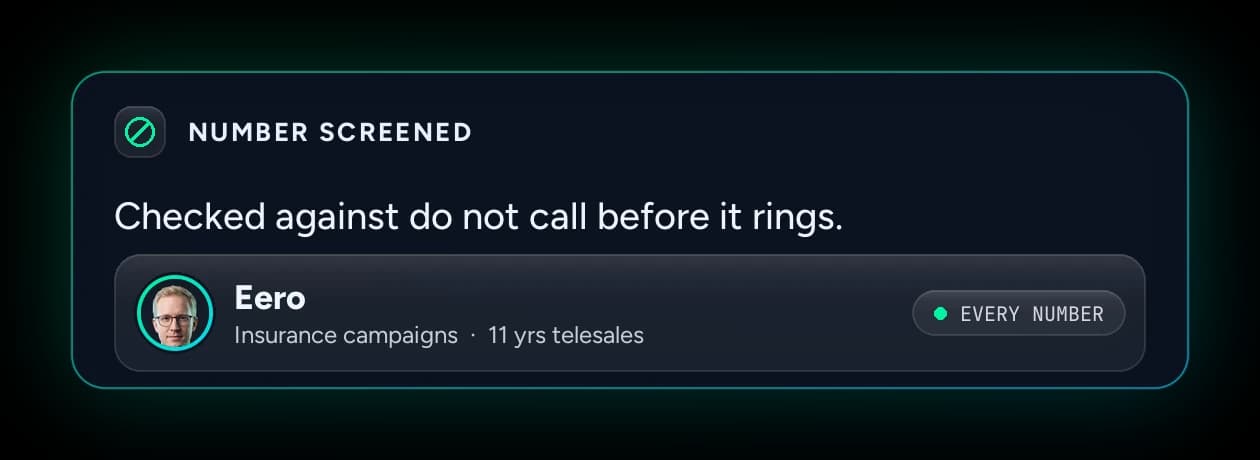
Screened numbers. Every number is checked against the do-not-call register in its market first, so a seller cannot reach someone who opted out.
Approved script. Approved per campaign and per sector, so what is said on your behalf is what you signed off.
Recording. Recorded with the disclosure the market requires, and kept attached to the sale it produced.
Follow-up, on triggers you set
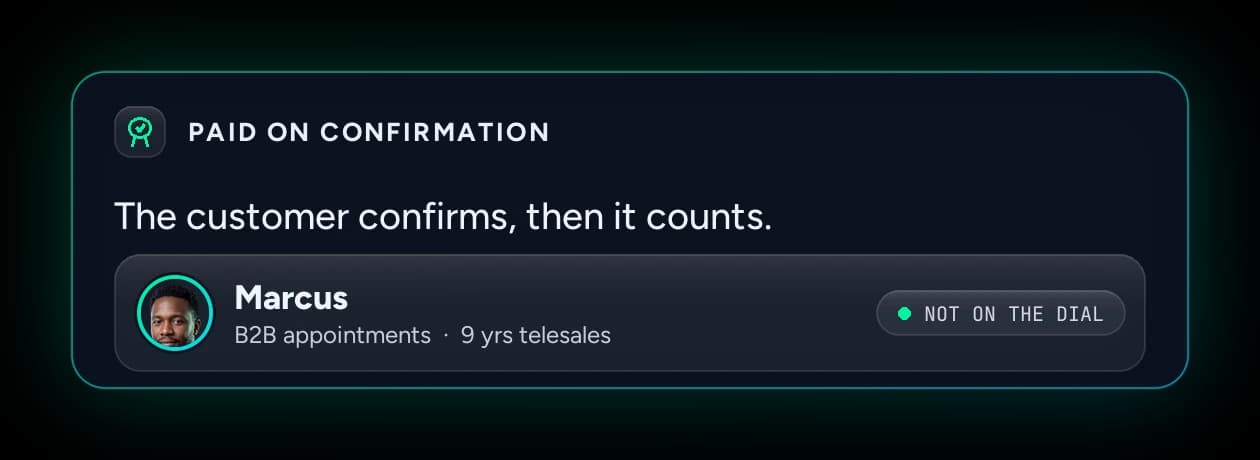
Confirmation SMS. The customer confirms in writing while the seller is still on the line. This is the billing event, not a courtesy: no confirmation, no sale.
Follow-up email. Terms, welcome packs and the paperwork a regulated sale needs, from templates you approve, attached to the call that produced it.
Follow-up SMS. Reminders, delivery windows and cooling-off notices, on the same approval and the same thread.
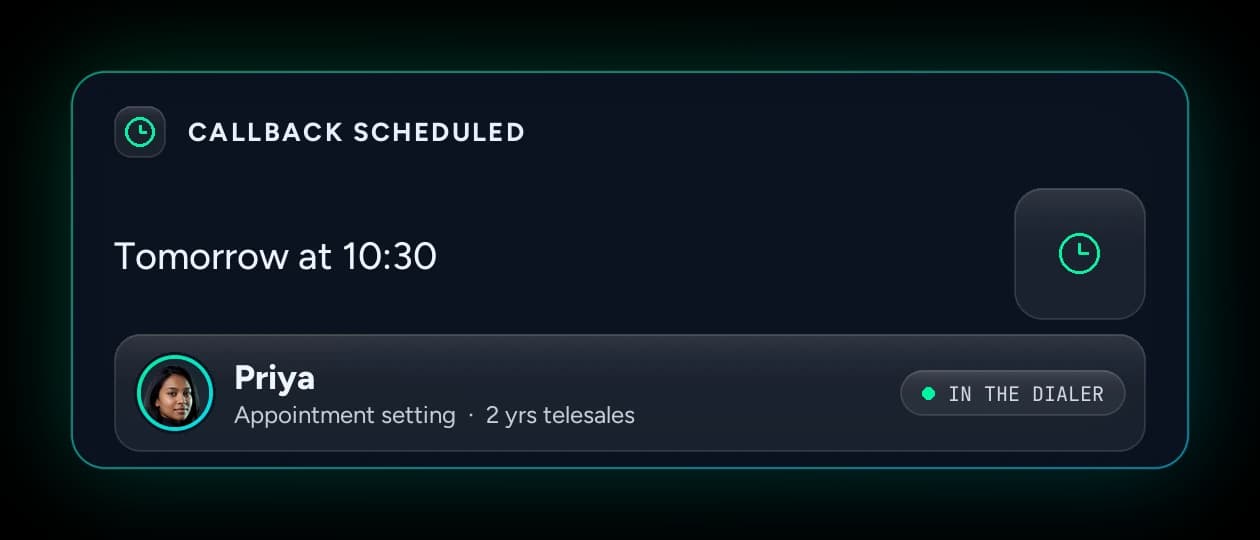
Callbacks. Booked on the call and queued automatically, held for the seller who took the first one. A scheduled item, not a note.
The handover
CRM push. Confirmed sales, outcomes, recordings and transcripts land in your CRM mapped to your fields, not dumped into a note.
Webhooks. Where no native connector exists, the same events are available as a feed you can point anywhere.
Export. Itemised per sale and matching the invoice line for line, so finance and CRM never disagree about what happened.
Dashboard. Calls, confirmations, cancellations inside cooling-off and what is payable, per campaign and per market.
What a seller and a campaign see
None of it alters the billing. A sale is billed when the customer has confirmed it in writing and the cooling-off period has run, whatever tooling sat around the call. Follow-up, callbacks and CRM sync are how the campaign is run, not what you are charged for.
Does it talk to what we already run
Does it integrate with our CRM?
Yes. Confirmed sales, call outcomes and recordings push into your CRM as they happen, so the record your team works from is the same one the seller created. Where a native connector does not exist, the same events are available as a webhook feed.
Can you send the follow-up email and SMS?
Yes. Confirmation SMS is sent on the call and is part of the model rather than an add-on. Follow-up email and SMS run from templates you approve, on triggers you set, and every send is attached to the call it came from.
What happens when a customer asks to be called back?
The seller books it on the call and the callback lands in the same queue, held for the seller who took the original call where that is possible. Nothing depends on someone remembering to write it down.
Do we get the call recordings?
Yes. Recordings and their transcripts are attached to the sale record and pushed with it, retained for the period the market requires.