Telesales work for sellers who have done it before
Self-employed. You apply, you are matched on experience, and you choose the hours you work.
Campaigns taking applications
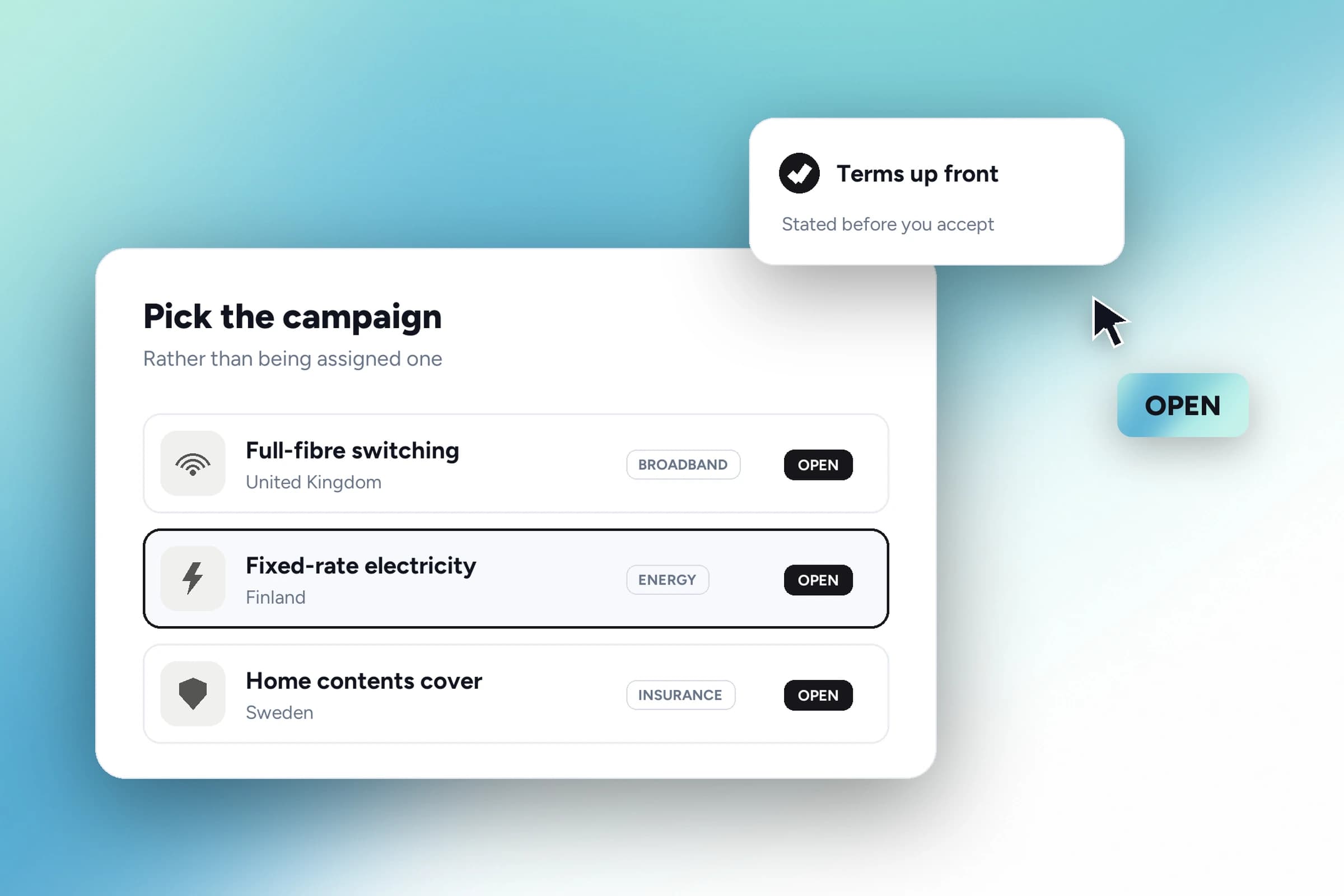
Live campaigns from brands on the platform. Each states its commission, market and calling window in the app before you accept it.
 Campaign openApply
  Campaign openApply
  Campaign openApply
  Campaign openApply
  Campaign openApply
 - +10 more campaignsLockedApply to see them
Openings change as brands fill them. You apply once, free, and are matched on the experience in your application.
Paid your way: a floor, or a ceiling
Every campaign states which of the two is on the table before you accept it. Promising callers can be offered the salaried track on any campaign.
You are newer to phone sales, or promising enough that we would rather underwrite your ramp than lose you to a bad first month.
- A monthly amount agreed before you start
- Paid whether or not a call closes
- Commission on top of every confirmed sale
- Free training, leads and dialer included
- Move to commission-only when you are ready
You have sold on the phone before and can already close.
- The higher commission rate of the two tracks
- Nothing caps a good month
- Pick campaigns, hours and methods yourself
- Rate stated up front, fixed for the campaign
- Self-employed: you invoice for what you close
Where the work happens
Where campaigns are open
What is checked before you dial
If you have sold on the phone before, commission-only pays the most. If you are starting out, the agreed minimum guarantees a floor for the hours agreed, with commission on top of it. This is a job where you sell. If you are after work with no selling in it, a contact centre suits you better. We would rather say so now than after you start.
These are not employed vacancies, and they are not open to everyone. You apply on the platform and are matched to campaigns on the phone-sales experience you bring. Not every application leads to a campaign. There are two pay models: a salaried track that guarantees a minimum for the hours you work while you learn, with commission on top, and commission-only, which pays a fixed amount per confirmed sale and nothing in between. Which one applies is stated in the campaign terms before you take it on.
Four things people want to know before they start
Working from home
Every campaign on the platform is worked from a browser, so home is the normal case rather than a concession you negotiate. The kit list is a laptop or phone, a headset and a room where you will not be interrupted. There is nothing to install, no dialer hardware, and nothing to buy from us at any point. The leads, the dialer and the script all load in the same tab. What decides whether a home setup works is noise: a barking dog or a television in the background is the single most common reason a first call goes badly, because the customer hears it before they hear your offer. A wired headset and a closed door fix more first-week problems than any change to what you say.
Part-time, evenings and around another job
Nobody assigns you a shift, so working two evenings a week is not something you have to ask permission for. It is simply what you choose to do that week. This is the normal pattern rather than the exception: most sellers on the platform have other income, and many started while employed full-time somewhere else. It also happens to fit the work, because consumer campaigns convert best between 17:00 and 20:00 when people are home and willing to talk, which is exactly the window a day job leaves free. The honest caveat is at the bottom end. Below about five hours a week you rarely make enough calls to get past the practice stage, so the hours feel wasted rather than slow. The people who quit early are usually the ones who gave it two hours a week and concluded it does not work.
What gets you matched
Who works a campaign is decided on record, and what is weighed is what you have already sold over the phone: which sectors, at what price point, and whether you closed on the call or passed the lead on. Regulated sales, high-ticket consumer work and anything with a compliance script behind it all count for more than length of service alone. This is the part people get wrong when they apply. A general customer-service background is not the same thing as a sales background. Neither is a year of transferring calls to a closer. The commission-only campaigns worth having go to sellers who have carried a target and hit it. Having never sold on a phone does not rule you out, though. It points you at the salaried track, where you are paid a minimum for the hours you work while you learn the job, rather than at commission-only, where a slow first month pays nothing.
The two ways you can be paid
There are two arrangements here and you are not forced into the wrong one. The salaried track pays a monthly salary agreed with you before you start, a guaranteed amount for the agreed hours whether or not a call closes, with commission on top of the sales you make. It exists so that someone learning the job, or a promising caller we want to back, is not living on a bad fortnight. The trade is a smaller commission rate and hours that are agreed with you. Commission-only pays a fixed amount for each sale the customer confirms and nothing for the time in between. The rate is published before you take the campaign on, it does not change between your first sale and your five-hundredth, and nothing caps a good month. Experienced closers almost always want the second. Which one is on the table is stated in the campaign terms before you accept anything. What we will not do is print an earnings figure: what you make depends on your hours, your campaign and your conversion rate, and any number here would read as a promise we are in no position to keep.
Companies looking for sales agents
If you have been searching for a list of companies looking for self-employed sales agents in the UK, this platform is that list with the admin already built. Brands publish campaigns with the commission stated per verified sale. You apply once, and the brands whose products match what you have sold before can take you on as the independent agent you already are. You invoice nobody and chase nobody: the customer confirms each sale by SMS, and payouts run through the platform. The relationship is the classic commission-only agency one, self-employed on both sides of the deal, with the sourcing, the dialer, the number screening and the payment rails handled.
The two pay models
| Salaried | Commission-only | |
|---|---|---|
| Who it suits | New to phone sales, or learning a new sector | You have carried a target and can already close |
| Guaranteed minimum | Yes, for the hours you work | None |
| Commission | On top of the minimum | The whole of your pay |
| A week with no sale | Still paid for your hours | Pays nothing |
| Ceiling | Lower | Nothing caps a good month |
| Hours | Agreed with the campaign | Entirely yours |
Everything under telesales jobs
What people ask first
Is this an employed job?
No. You are self-employed on every campaign, so you invoice for what you sell rather than drawing a wage, and nobody can assign you a shift or a rota. If you want an employed role with holiday pay, an outbound contact-centre job is the honest alternative.
Do I need to apply?
Yes. You apply on the platform and your sales background is reviewed before you are matched to a campaign. It is not automatic and not everyone is accepted. What decides it is what you have sold on the phone before, not how the application is worded.
What does the work pay?
There are two packages. The salaried track pays a monthly salary agreed up front, a guaranteed amount with commission on top, and is offered to newer and promising callers. Commission-only pays the bigger commission of the two on every sale the customer confirms, with nothing capping a good month. Each campaign states which is on the table before you accept, and we do not publish an earnings figure: what you make depends on your hours, your campaign and your conversion.
Is it free to apply?
Yes. Applying, the dialer, the leads and all seven training lessons cost nothing. If a phone-sales opportunity asks you for money up front, it is not this one.
Is commission-only legal?
Yes, where the relationship is genuinely self-employed. Minimum wage rules cover workers and employees, not self-employed contractors selling on their own account. That is why nobody here can assign you a shift or direct your working day. If they did, the arrangement would be something else.
No campaign that fits? Apply anyway
Leave your details either way. Sellers are matched as new briefs open, and brands tell us what they need sold and we line callers up against it.
- Sellers: what you have closed by phone, and in which market
- Brands: what you sell, and the market you want called
- A founder reads it
A marketplace only works with both sides
Whichever one you are, it is free to look and there is nothing to sign before you see the numbers.
 I want to sell
Sell for brands, on your own account
Apply with your sales background, get matched to a live campaign, and keep a fixed commission on every sale a customer confirms.
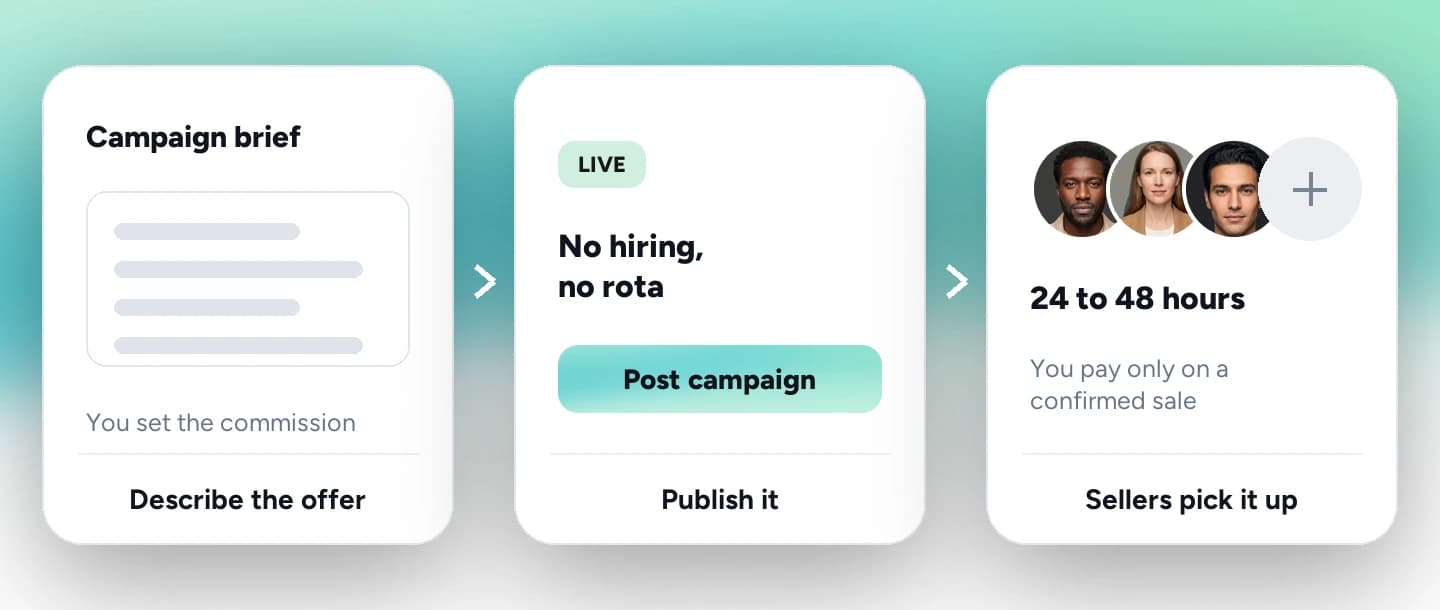 I have something to sell
Book a call, pay per result
We build the campaign from your brief for £500. You pay per booked meeting, or per sale the customer confirmed in writing and did not cancel.