From nothing to your first verified sale
Self-employed. You apply, you are matched on experience, and you choose the hours you work.
This section covers what stands between applying and hearing a customer say yes: what brands weigh when they match a seller to a campaign, what the work asks of you, and what the first call sounds like.
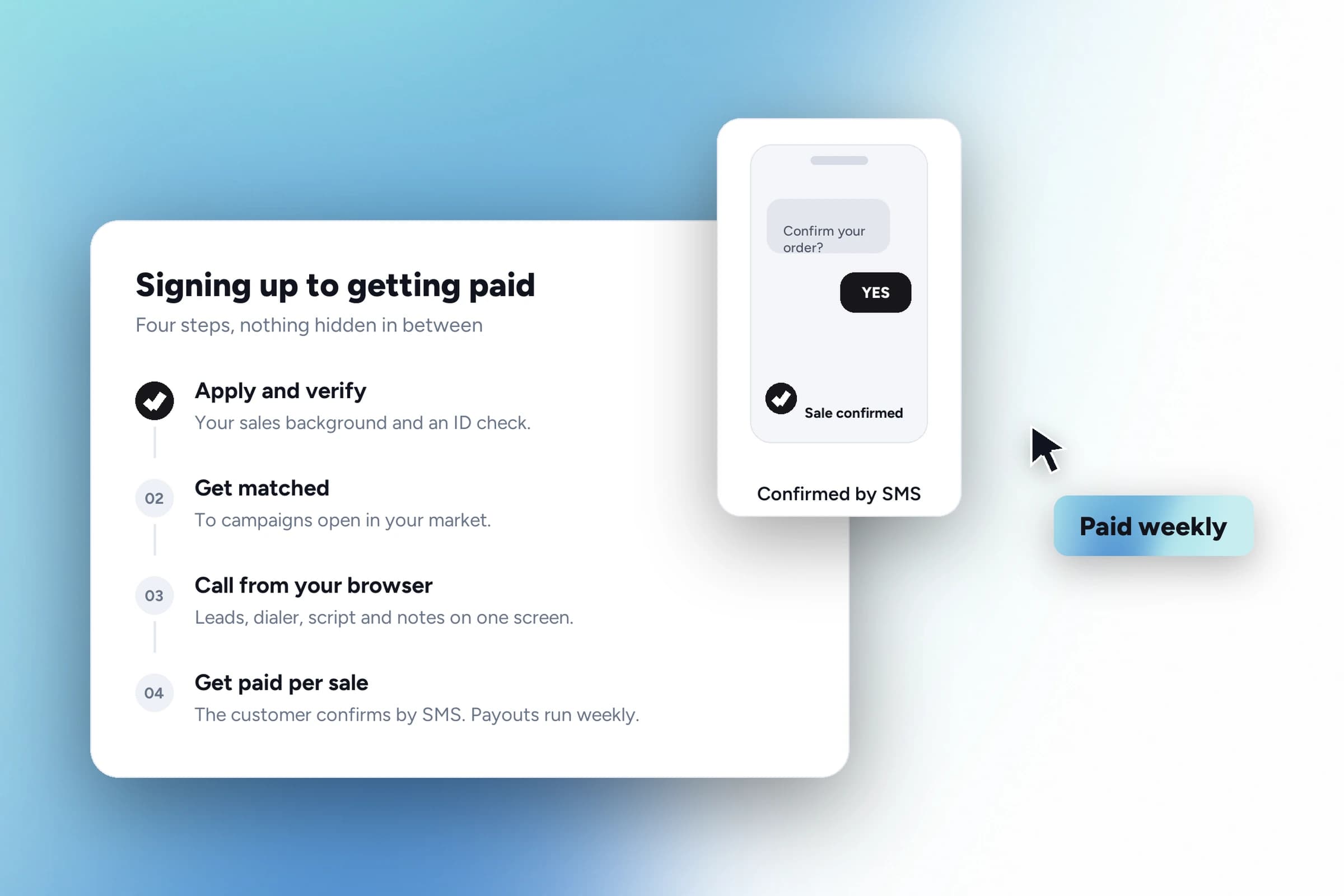
What happens, in order
What the application asks for
The application is about your selling history, not your CV formatting. What matters is what you have sold over the phone, in which sector, at roughly what price point, and whether you closed on the call or handed the lead to someone else. If you have carried a target, say what it was and whether you hit it. That single line does more than a page of adjectives. Two things slow an application down more than anything else. The first is describing customer-service work as sales, which brands spot immediately and read as padding. The second is vagueness about outcomes: "worked in a busy call centre" tells a brand nothing it can act on, where "eighteen months outbound on energy switching, averaging four sales a shift" tells it everything. You are not being marked on presentation. You are being matched on evidence.
What happens between applying and calling
Nothing is instant, and that is the honest shape of it. Your identity is verified, and then brands with open campaigns in your market look at what you have sold before and decide whether you fit what they are selling. Some campaigns want a specific sector background. Regulated products usually do. Others care mainly that you have held a target and can follow a compliance script without sounding like you are reading one. A match is the brand's decision, not a queue you advance through by waiting, and not every application produces one. If none of the currently open campaigns fit your background, you will not be matched until one does, which is why the campaigns open in your market matter as much as your own experience does.
What the first week looks like
Assume the first fortnight is calibration rather than earnings. Even sellers with years behind them need a stretch to learn a new product, a new script and a new objection set. The sellers who quit early are almost always the ones who expected week one to look like month three. Expect the first sessions to feel slower than your last job: you are reading a script you did not write, on a product you have just learned, to a list you did not build. What comes back fastest is the part you already own, the ability to keep talking after a no, and to hear when someone is actually listening. What takes longest is the specific objection pattern of the new product, because it is the only part of the job that does not transfer.
What you need in place before you start
The equipment list is genuinely short: a laptop or phone, a wired headset, and a room where you will not be interrupted. Everything else runs in the browser, leads, dialer, script and notes on one screen, so there is nothing to install and no phone bill of your own. Nothing is sold to you at any point, and any phone-sales opportunity that asks you for money up front is not this one. The two things people underestimate are noise and admin. A television or a dog behind you is the most common reason a first call fails, because the customer hears it before they hear your offer. And because you are self-employed, registering with the tax authority in your country and keeping your own records is your responsibility from the first sale, not something to sort out later.
The two pay models
| Salaried | Commission-only | |
|---|---|---|
| Who it suits | New to phone sales, or learning a new sector | You have carried a target and can already close |
| Guaranteed minimum | Yes, for the hours you work | None |
| Commission | On top of the minimum | The whole of your pay |
| A week with no sale | Still paid for your hours | Pays nothing |
| Ceiling | Lower | Nothing caps a good month |
| Hours | Agreed with the campaign | Entirely yours |
Everything under get started
What people ask first
What happens after I apply?
You verify your identity, and your sales background decides which campaigns you are matched to. Each campaign states its terms, its calling window and its script guardrails before you accept it, so you decide whether it is worth your evening. But the match has to come first, and not every application leads to one.
How many hours before I earn anything?
There is no guaranteed answer. You are paid per verified sale and nothing before the first one. Treat the first fortnight as unpaid practice and you will not be blindsided.
Can I practise before calling a real customer?
Yes. The School lessons are free and open before you join a campaign, and every campaign carries a script with guardrails rather than leaving you to improvise. Most people work through the openers and the objection lesson first.
A marketplace only works with both sides
Whichever one you are, it is free to look and there is nothing to sign before you see the numbers.
 I want to sell
Sell for brands, on your own account
Apply with your sales background, get matched to a live campaign, and keep a fixed commission on every sale a customer confirms.
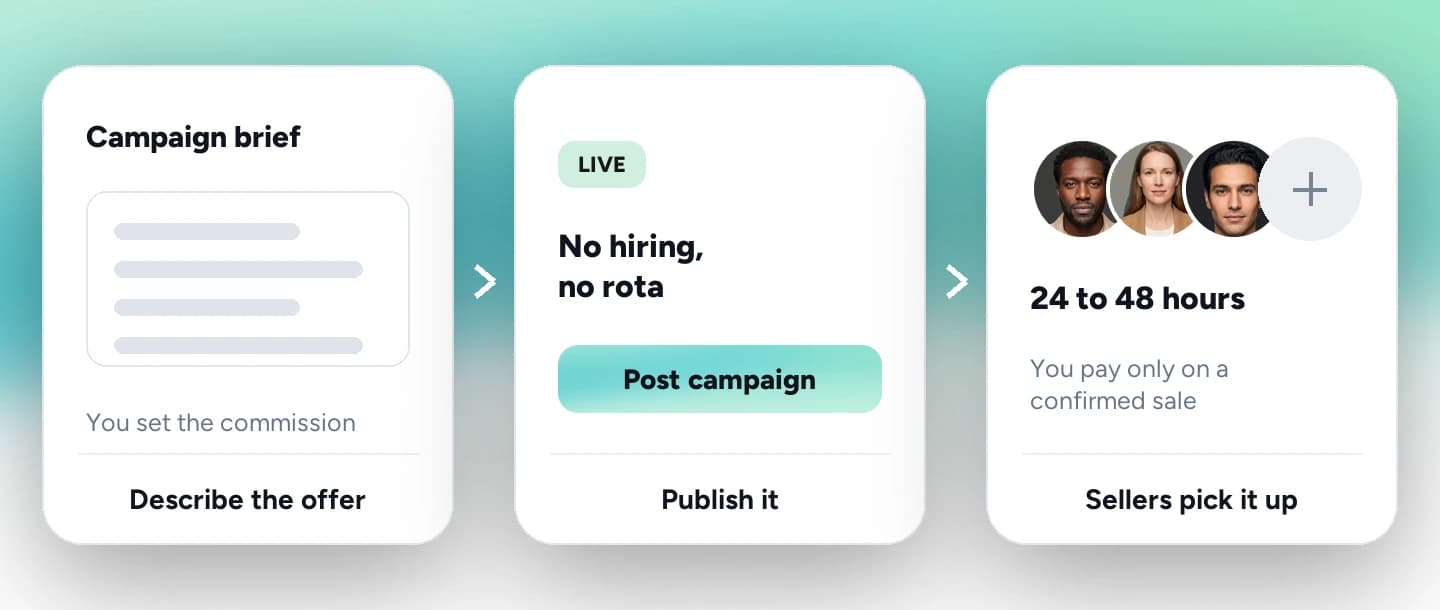 I have something to sell
Book a call, pay per result
We build the campaign from your brief for £500. You pay per booked meeting, or per sale the customer confirmed in writing and did not cancel.